
Age
Coating Exposed-Fastener Metal Roofs
- You See
- Rows of rusty screw heads with washers split or flattened.
- What It Means
- The hole around each screw lets water in. Loose screws become larger ones with new washers, and every head is sealed.
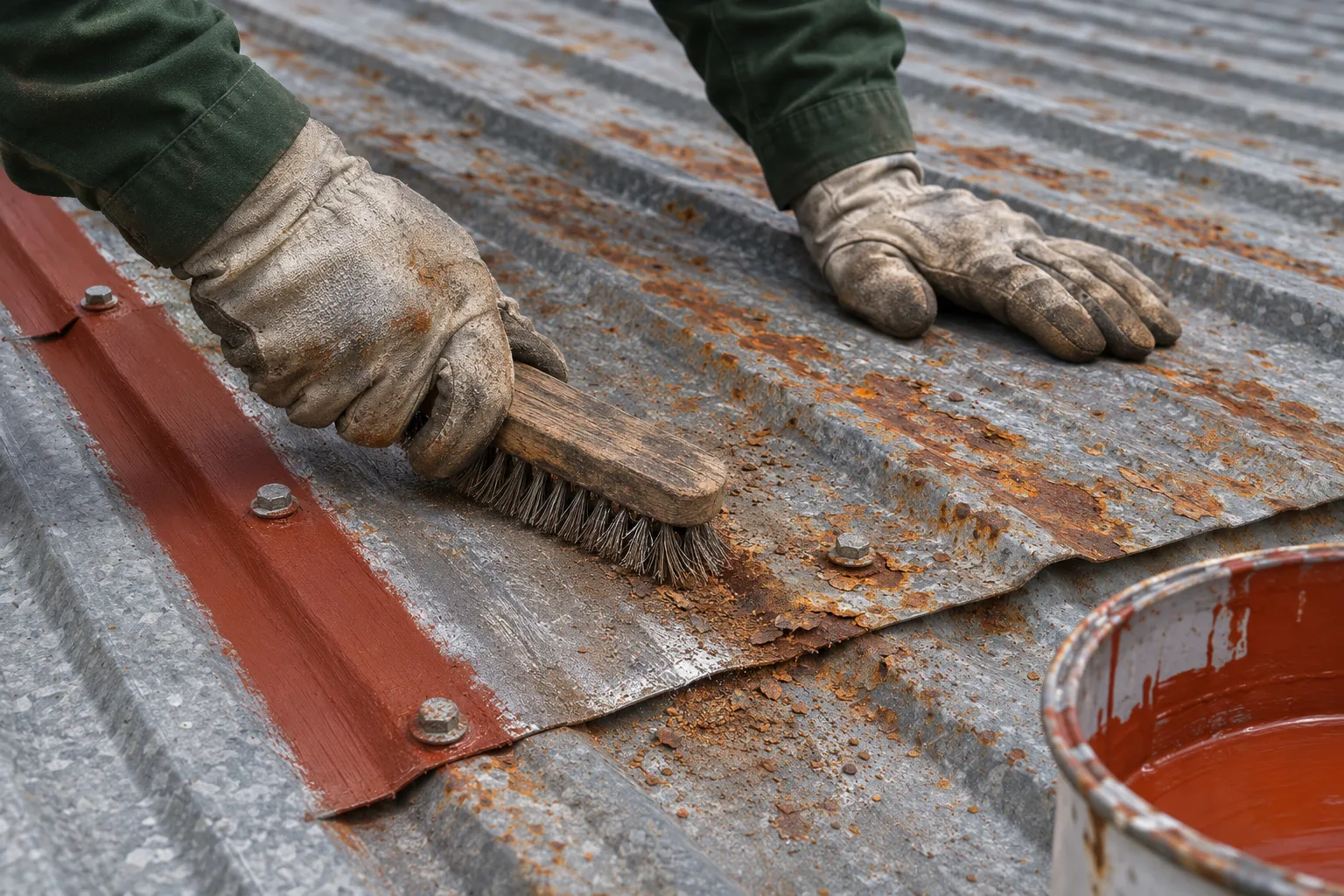
As a Hazleton commercial metal roof coating contractor, we restore steel roofs on warehouses, plants, and shops by fixing every connection before the coating goes on.
Hazleton commercial metal roof coating works on steel that still carries its load. Compare your roof row by row.
| Roof Detail | Ready To Coat | Needs Work First |
|---|---|---|
| Panels | Firm, with surface rust only | Holes, soft spots, or flaking steel |
| Screws | Tight, washers aging | Spinning, stripped, or missing |
| Laps | Closed and lined up | Gapped, lifted, or bent |
| Insulation | Dry under the whole field | Wet under drip lines |
| Old Paint | Chalky but holding | Peeling away in sheets |
Most leaks on steel roofs start at a joint rather than mid-panel. These are the joints we check first.
Steel roofs get one of these four approaches, set by how much of the roof needs repair.
Every screw, lap, and curb is repaired, rust is primed, and the whole field gets a base and topcoat. This fits roofs where leaks show up in many places. A full set of photos records each repaired detail before the base coat covers it.
Screws and laps are rebuilt and the field gets a single topcoat. It suits roofs with sound panels and leaks mostly at the joints. Field panels get the topcoat over cleaned, primed rust spots and sealed screw heads.
Low valleys that hold water take silicone while the sloped field takes acrylic, joined at a sealed, approved line. The boundary sits on a lap or ridge, so the two products meet on a clean edge.
Spray foam fills the corrugations and buries the screw rows under one insulated layer with its own topcoat. The topcoat over foam carries granules on the paths to rooftop units.
Restoration keeps the existing panels working. Here is what the coating adds to a steel roof.
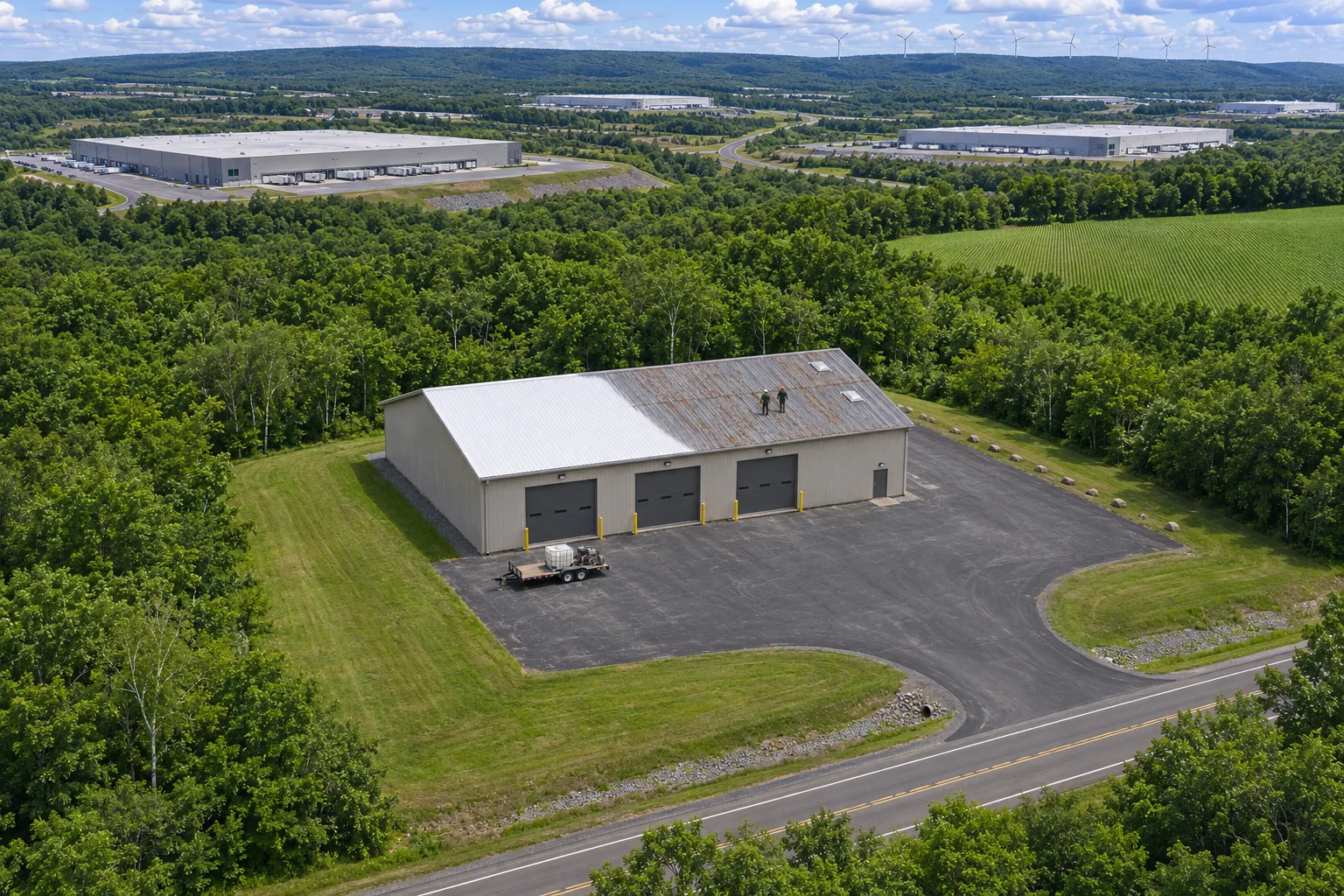
Exposed screws and laps become one continuous film, so water has no small openings left to find. Lap edges near the eave get the widest strip of fabric, where meltwater pushes hardest.
Primer and coating keep moisture off cleaned metal, which stops surface rust from spreading across the panel. Treated spots are marked on the roof plan and checked again at each yearly visit.
A white or light gray topcoat reflects sun that dark, weathered panels absorb all afternoon. The space under the roof feels the difference most on long July afternoons.
The panels stay put, so the deck stays closed and operations below keep running. Lifts and totes stay clear of entrances, and each section is finished before the next one opens.
Screw-line leaks are the most common reason steel roofs get restored. Get a planning range for coating yours.
Five steps, with most of the time spent at the joints. Each step is checked before the next one starts.
We test screws by hand, open suspect laps, probe rust with a scraper, and look under the deck for stains or wet insulation along the drip lines. Photos of each problem area go into the scope you sign.
Loose or stripped screws come out for oversized ones with new washers, and each head gets a dab of sealant before the base coat. Screws in rusted holes move to fresh steel a few inches away.
Old sealant is cut out, laps are pulled tight with stitch screws, and seam fabric is bedded into wet coating along each joint. Ridge caps and end laps get the same treatment as side laps.
Panels are washed, rust is primed, and base and top coats go on at the thickness the product sheet calls for. Wet-film readings are taken across the roof as the coating goes down.
You get photos of the repaired details and a note of the system and thickness used, ready for the next inspection. Those photos make the next inspection faster and easier to compare.
If your roof is not steel, or holds water, one of these may fit better.
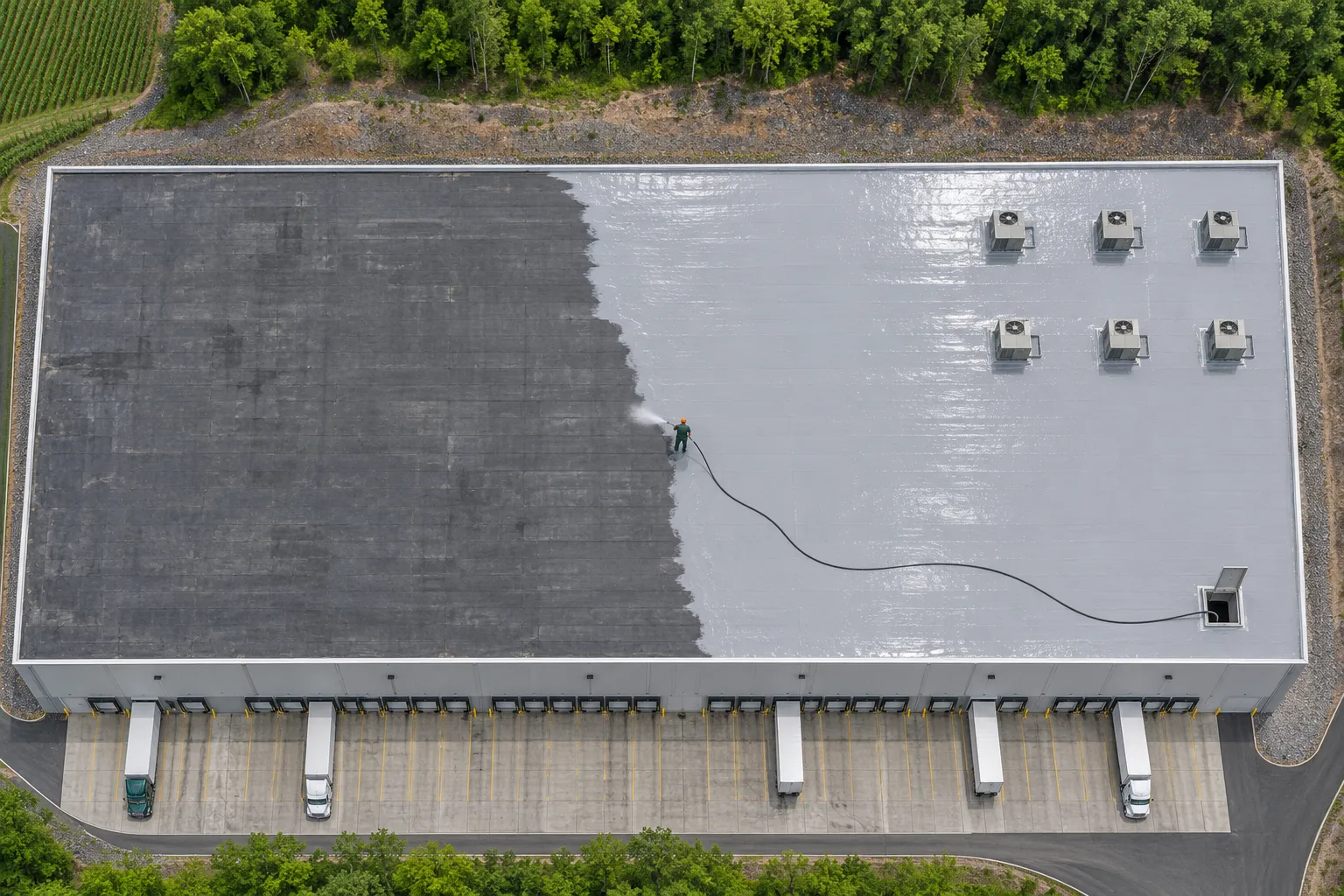
One thick, flexible layer for roofs that hold water.
Hazleton Silicone Roof Coating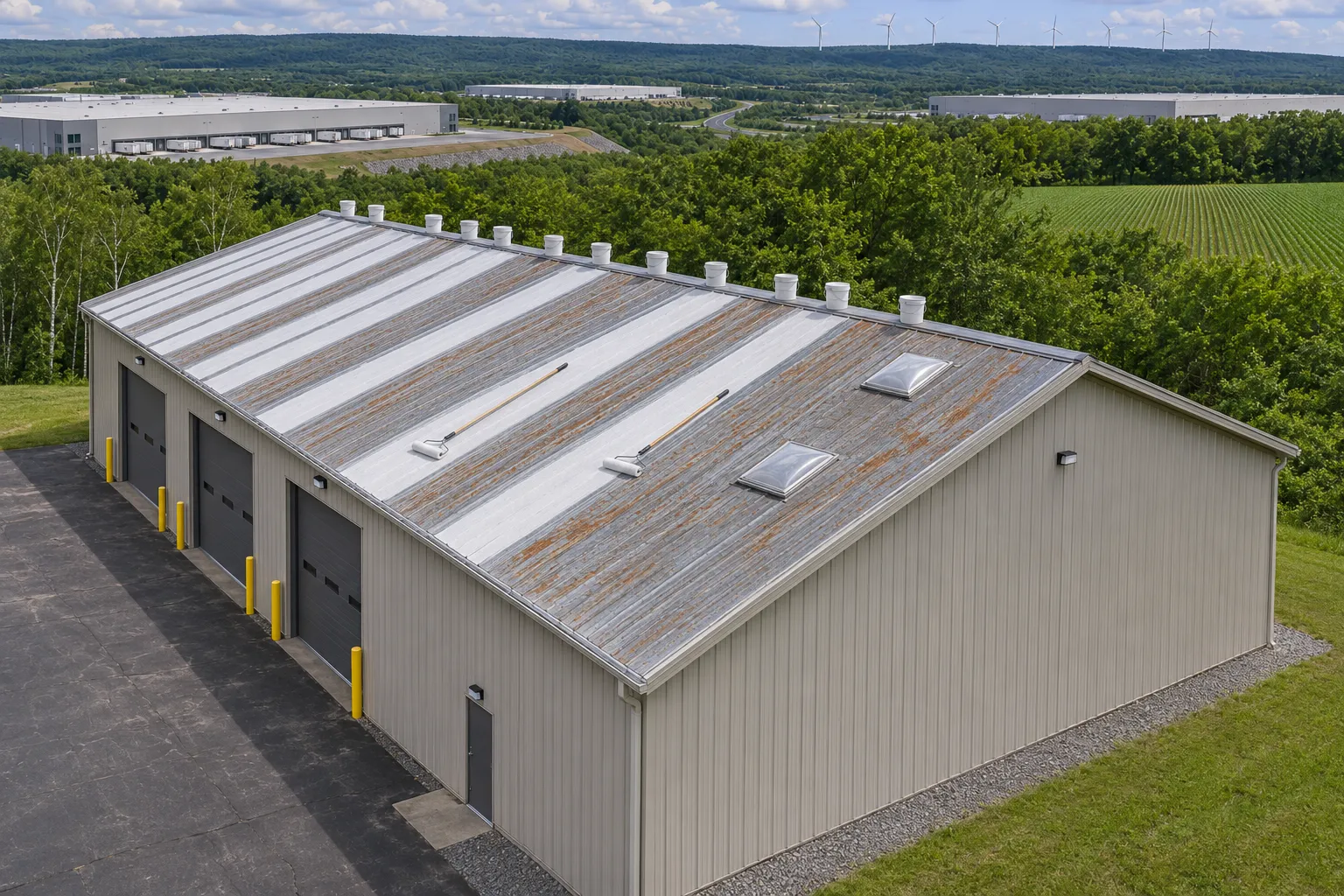
Water-based coats with fabric at seams on draining roofs.
Hazleton Acrylic Roof Coating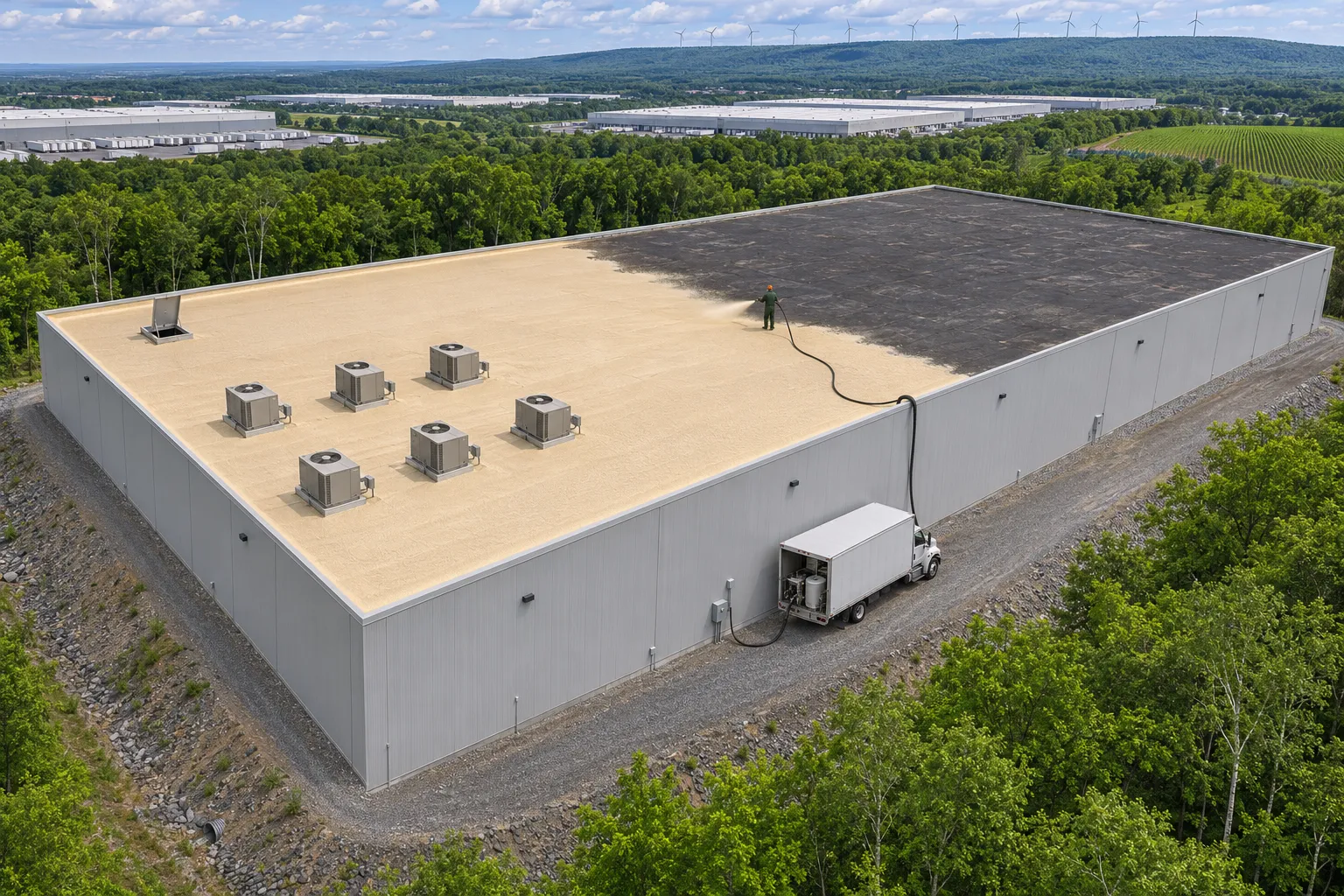
Sprayed insulation and a topcoat over flat and metal roofs.
Hazleton Spray Foam Roofing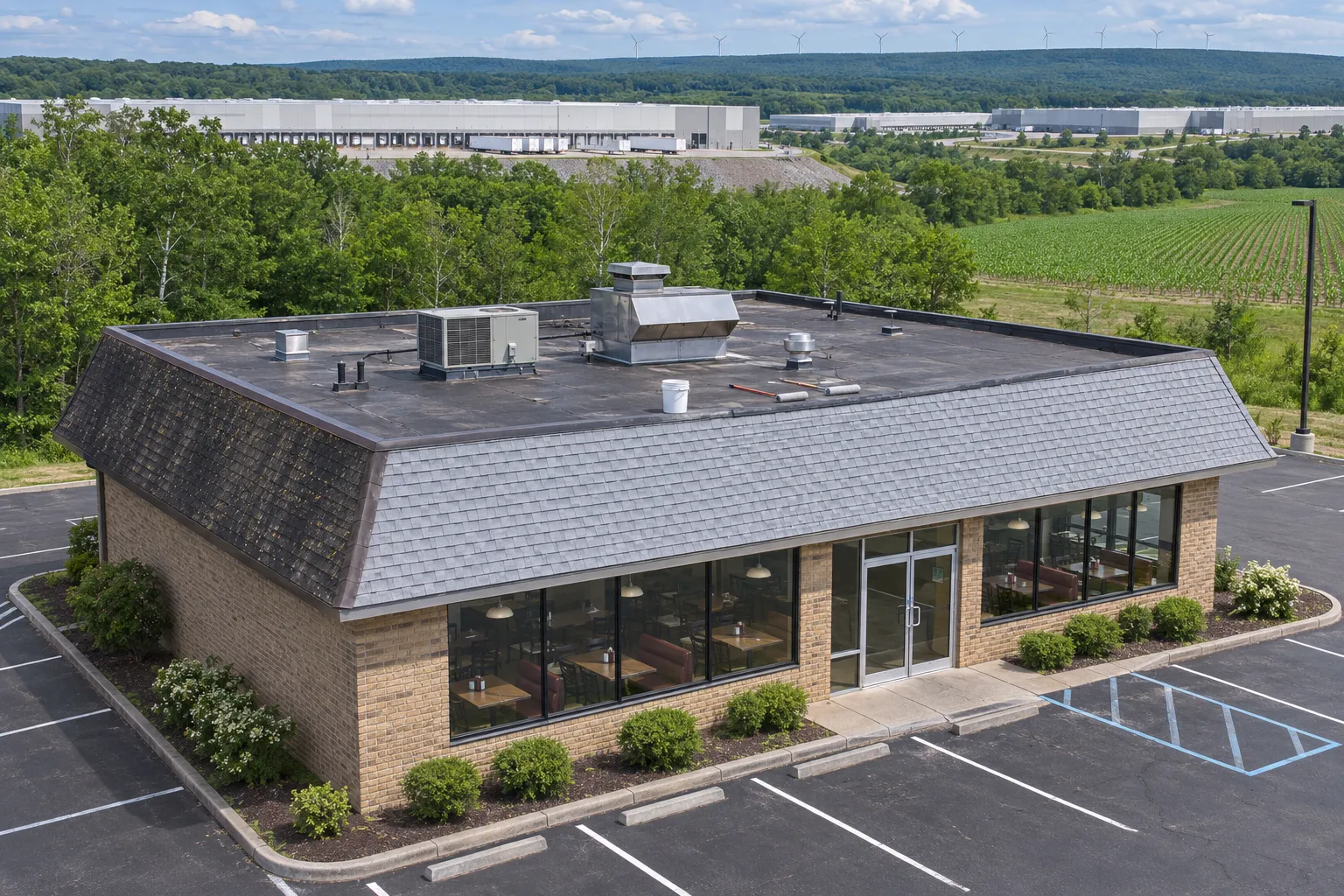
Coating for healthy commercial shingle faces, maker approved.
Hazleton Shingle Roof CoatingAnswers to what owners ask about steel roof restoration.
Coating plans out at roughly $2.50 to $4.00 per square foot of roof, against about $5 to $8 for replacement. A roof with tight screws and closed laps sits near the bottom of that range; one needing many new fasteners, rebuilt laps, and rust work moves toward the top.
Roofs with hundreds of screw heads to seal and many curbs add labor, so those details get counted during the inspection.
Two roofs of the same size can need very different prep. One has a few loose screws, the other has opened laps, rust at every vent, and three old patch layers to strip. Access, coating thickness, number of coats, and the count of curbs and flashings move the price too.
The inspection notes list each of those items by location, so you can see where the difference comes from.
Only after each one is checked. A spinning screw, a split washer, or a wallowed-out hole stays a leak under new coating. We tighten or upsize the fastener, seal the head, and then let the coating bridge over a connection that holds.
Standing seam roofs get their clips and end caps checked the same way, since loose clips let panels creep.
Loose scale has to come off until the steel underneath is firm. We remove flaking rust, check how much metal is left, and apply the primer the coating maker requires. An adhesion test on a prepared spot tells us the system will grip this roof.
Edges, ridge caps, and gutter ends get the same scraping, because rust there spreads under coating fastest.
It is when the panels and purlins are still solid. Older plant roofs often have good steel with worn screws, opened laps, and corroded curbs. Fixing those and coating the field keeps the roof working without a tear-off, while badly rusted sections get new metal first.
Purlins get a close look too, since screws need solid framing to grip after the panels are coated.
Get a planning range from your roof size, or call to book a walk of the screws, laps, and curbs.