
Drainage
Ponding Rings Near Drains
- You See
- Dirt circles and algae marks around drains and in low corners.
- What It Means
- Water sits there longest. Drains are cleared and the low spots get extra coating thickness.
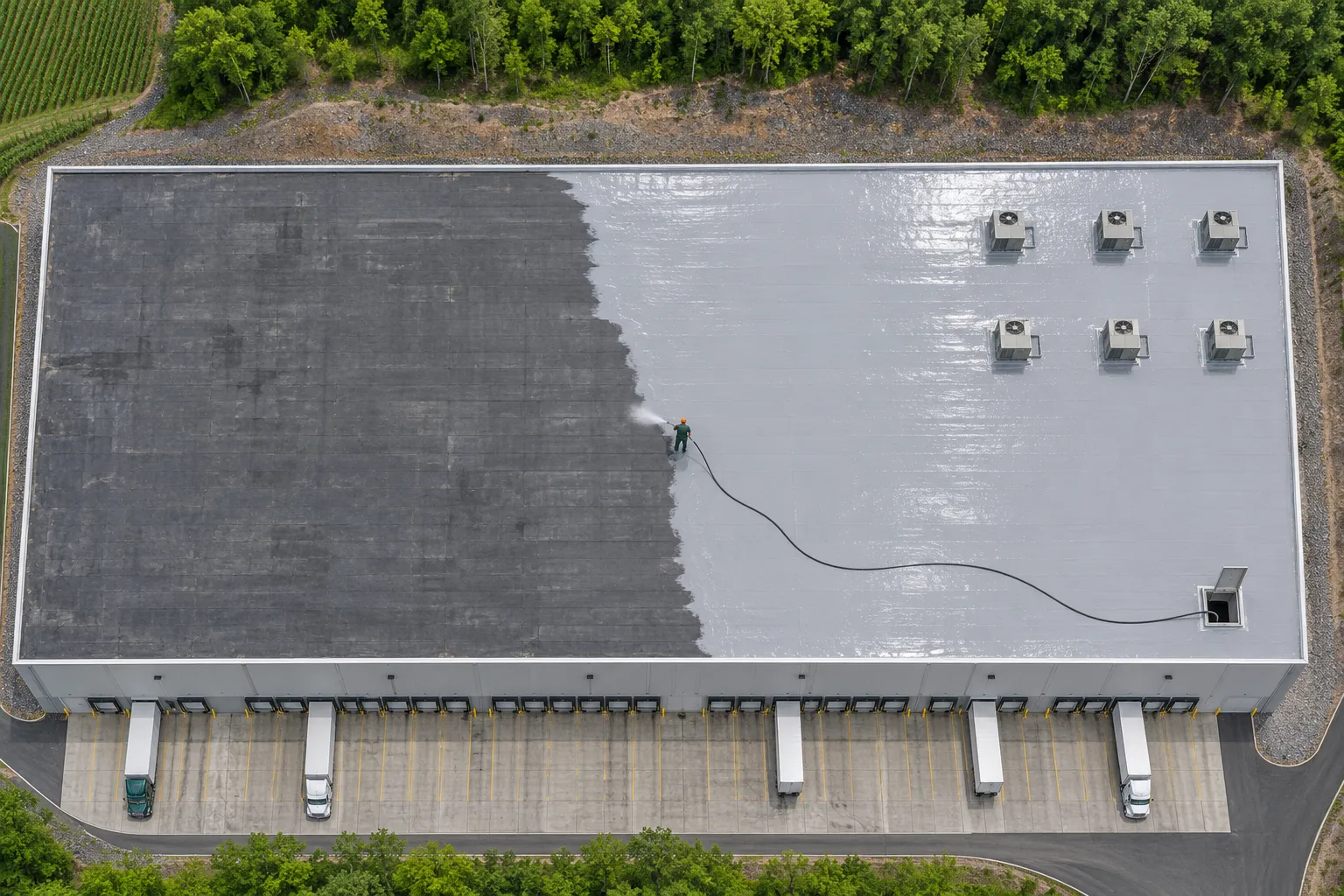
As a Hazleton silicone roof coating contractor, we coat low-slope metal, single-ply, and built-up roofs where water lingers near drains and valleys.
Hazleton silicone roof coating fits low-slope roofs with sound decks and working drains. See where yours lines up.
| Roof Detail | Good Fit | Fix Or Rethink |
|---|---|---|
| Slope | Flat to low slope | Steep faces that shed fast |
| Standing Water | Some after storms, gone in a day or two | Ponds that stay for a week |
| Deck And Insulation | Dry and firm | Soft or wet areas |
| Rooftop Traffic | Occasional service visits | Daily traffic to many units |
| Existing Surface | Clean single-ply, metal, or foam | Loose gravel or failing coatings |
Silicone goes on many roof types. These conditions decide the prep and the primer.
Silicone comes in a few forms. The roof surface and the traffic on it decide which one we use.
High-solids silicone goes on in one heavy pass over a cleaned and primed roof. Fewer passes mean fewer days with open work on the roof. The single pass is checked with a wet-film gauge every few feet.
Seams, laps, and flashing get fabric set into silicone first, then the field coat bridges over them. Fabric widths are chosen to cover the full seam with a margin on each side.
Granules broadcast into wet silicone along routes to units give boots more grip and slow wear. Paths follow the real routes your technicians take to each unit.
Low-slope steel gets rust primer and fastener sealing, then silicone where valleys hold water. Silicone goes heavier in the valleys and lighter on the sloped panels around them.
Silicone earns its place on roofs that stay wet. Here is what it adds.
Cured silicone resists breakdown where water sits after rain, the spot where many coatings wear first. Low corners and drain bowls get the thickest film, since water sits there longest.
The film keeps its stretch in the cold, so it moves with seams and curbs instead of cracking. Seams and flashing at curbs stay sealed through cold snaps on the plateau.
Thick single passes shorten the time the roof is open to weather and to workers. Fewer passes also mean fewer days of lifts and hoses around your entrances.
A light finish reflects summer sun, keeping the roof surface and the space below cooler. The light surface also keeps the membrane underneath from baking in July.
Roofs that hold water after storms are where silicone fits best. Start with a planning range for yours.
Silicone forgives damp air better than most coatings, but it still needs a clean, dry surface on the day it goes on.
We mark ponding areas, probe soft spots, take moisture readings, and run an adhesion test patch on the existing surface. Ponding spots are outlined with marker so they get extra material later.
Drains, scuppers, and gutters are cleared, wet areas cut out and replaced, and open seams fixed before cleaning starts. Wet insulation found under the membrane is replaced with dry board.
The roof is pressure washed, degreased near fans, and primed where the test patch showed the bond needs help. The roof dries fully before primer goes on.
Fabric goes into silicone at seams and flashing, then the field is sprayed at the planned thickness with extra in low spots. Coating stops for the day before evening dew settles.
Walk paths to units get granules, and your maintenance staff get a note on which patch materials bond to silicone. A short care sheet lists drains, paths, and repair products.
Roofs that drain fast or need insulation have other options.
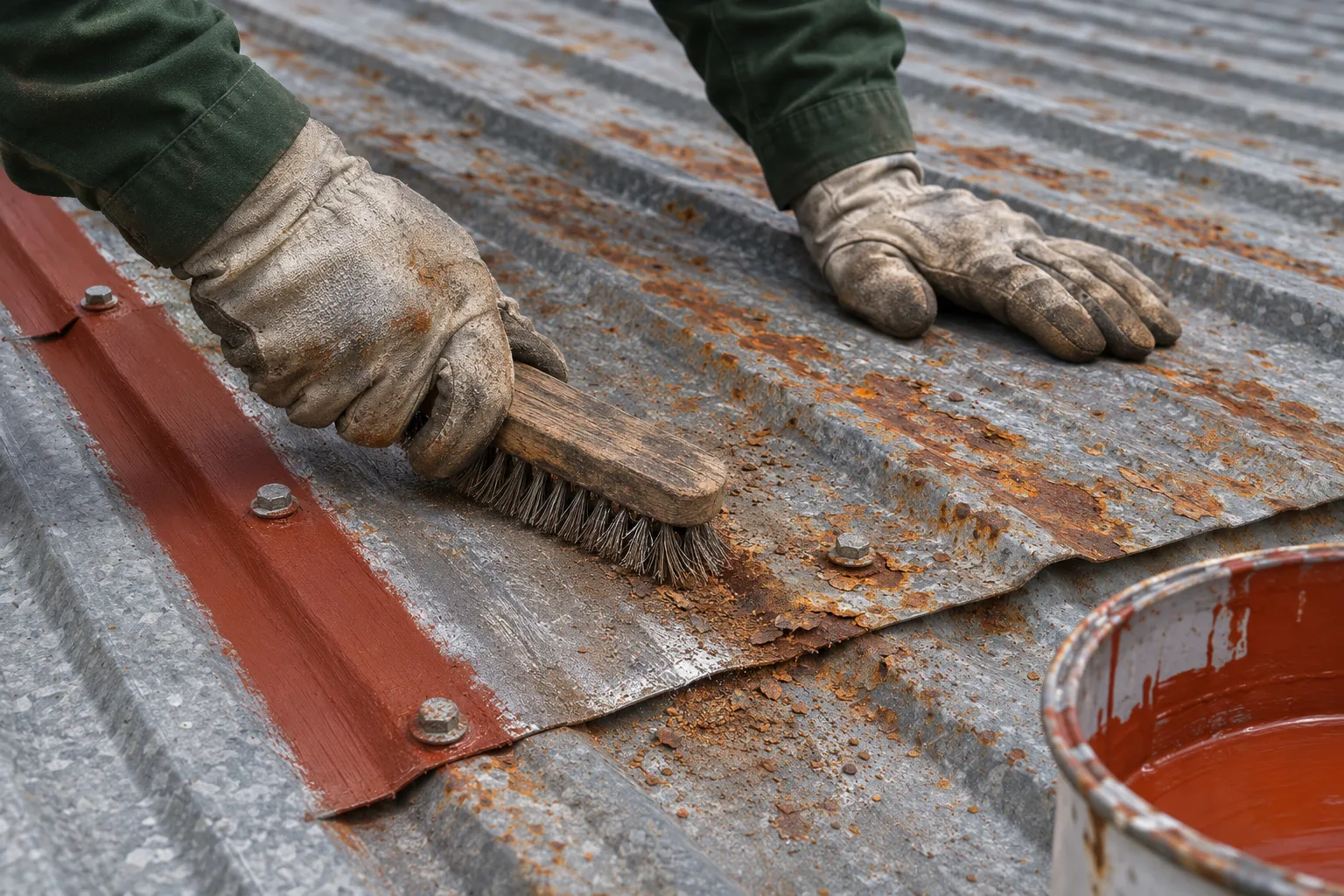
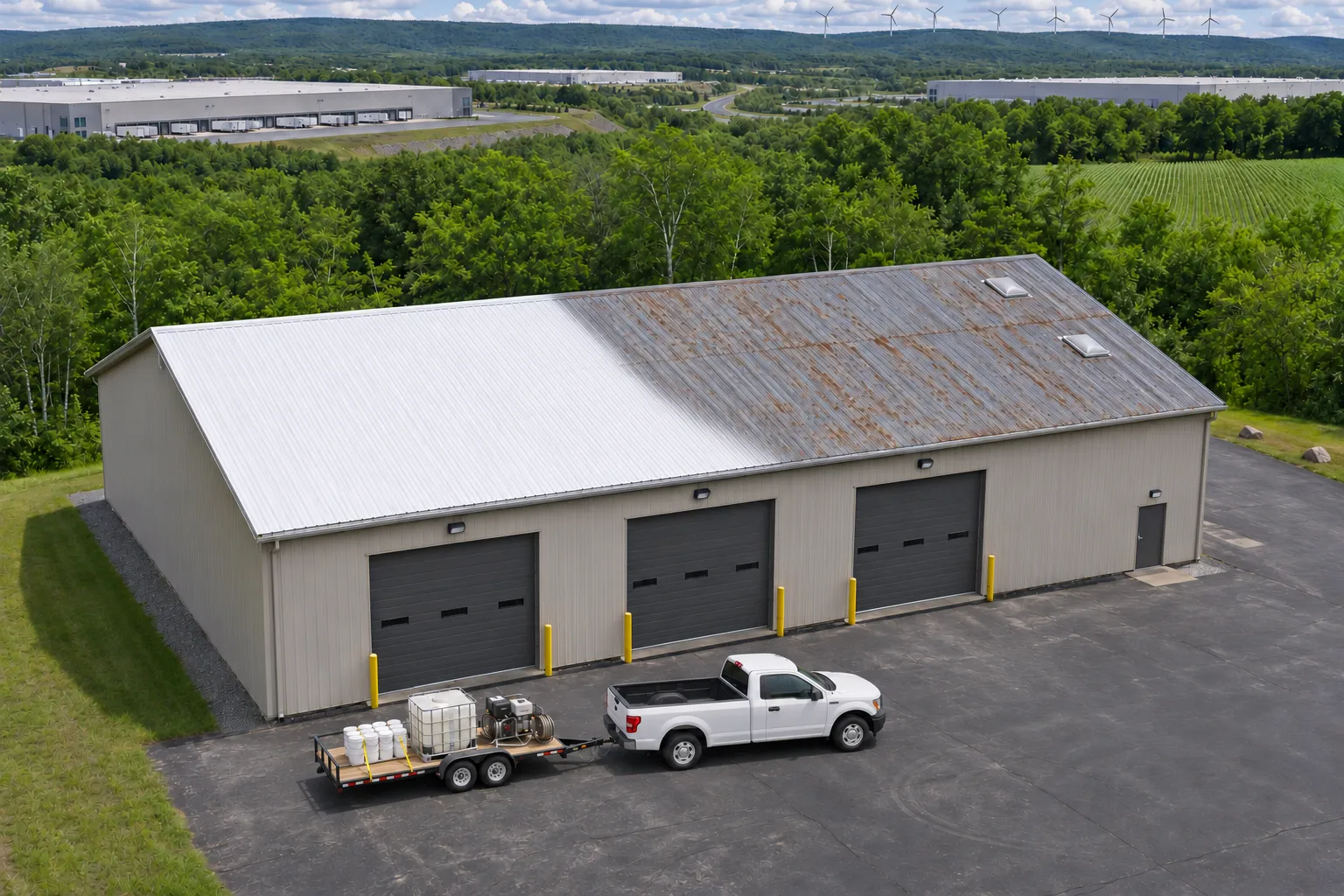
Screws, laps, and rust repaired, then steel panels coated.
Hazleton Commercial Metal Roof Coating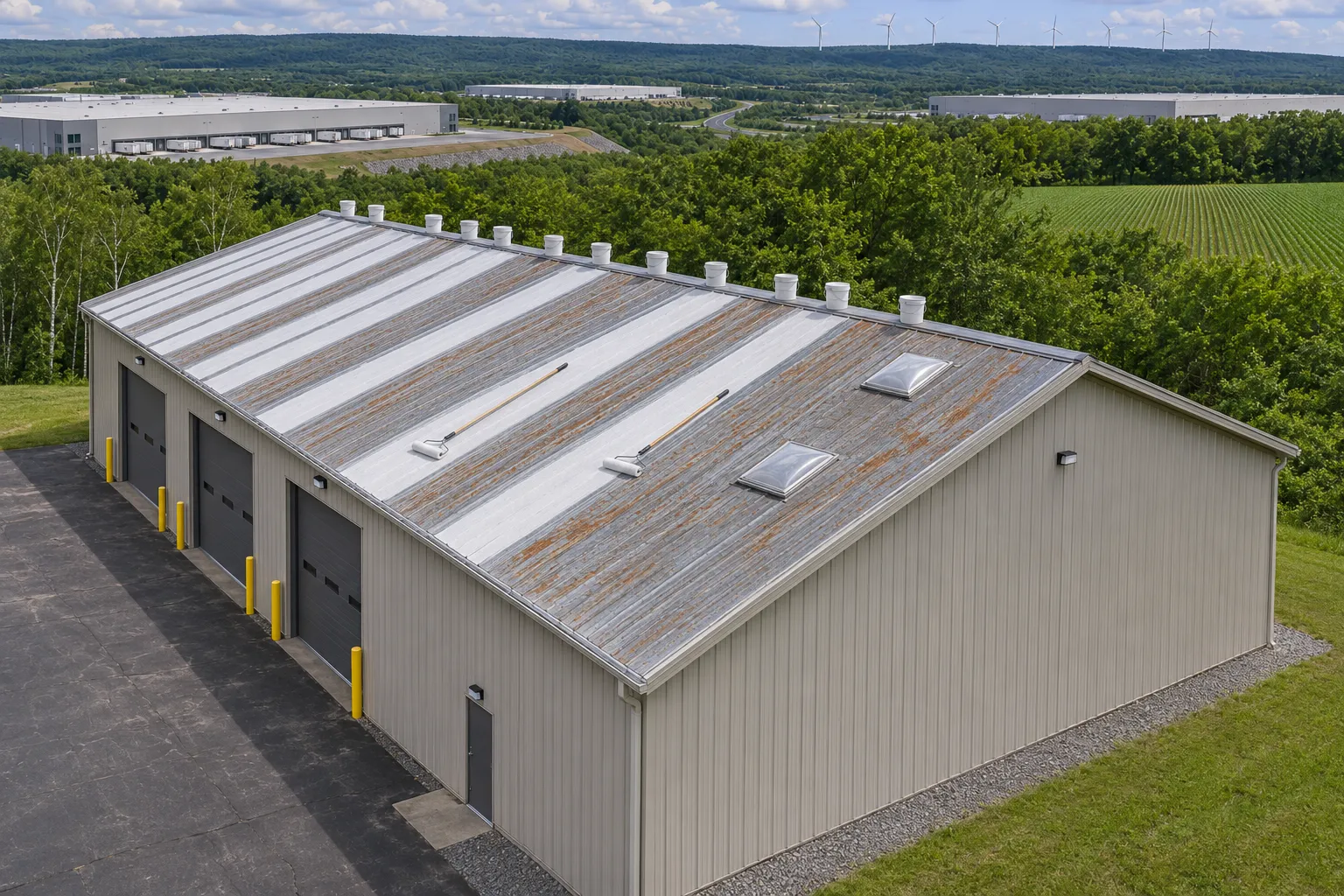
Water-based coats with fabric at seams on draining roofs.
Hazleton Acrylic Roof Coating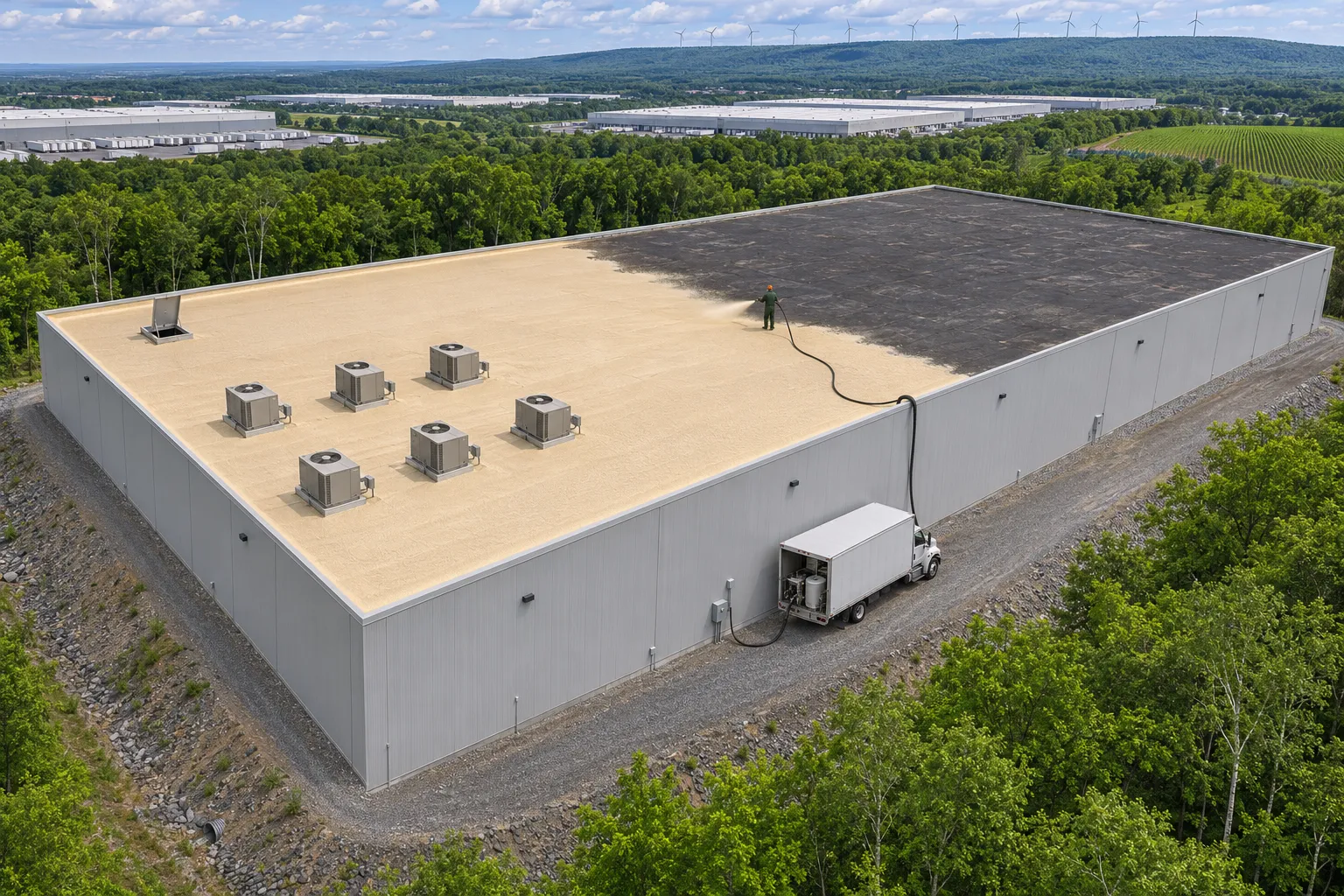
Sprayed insulation and a topcoat over flat and metal roofs.
Hazleton Spray Foam Roofing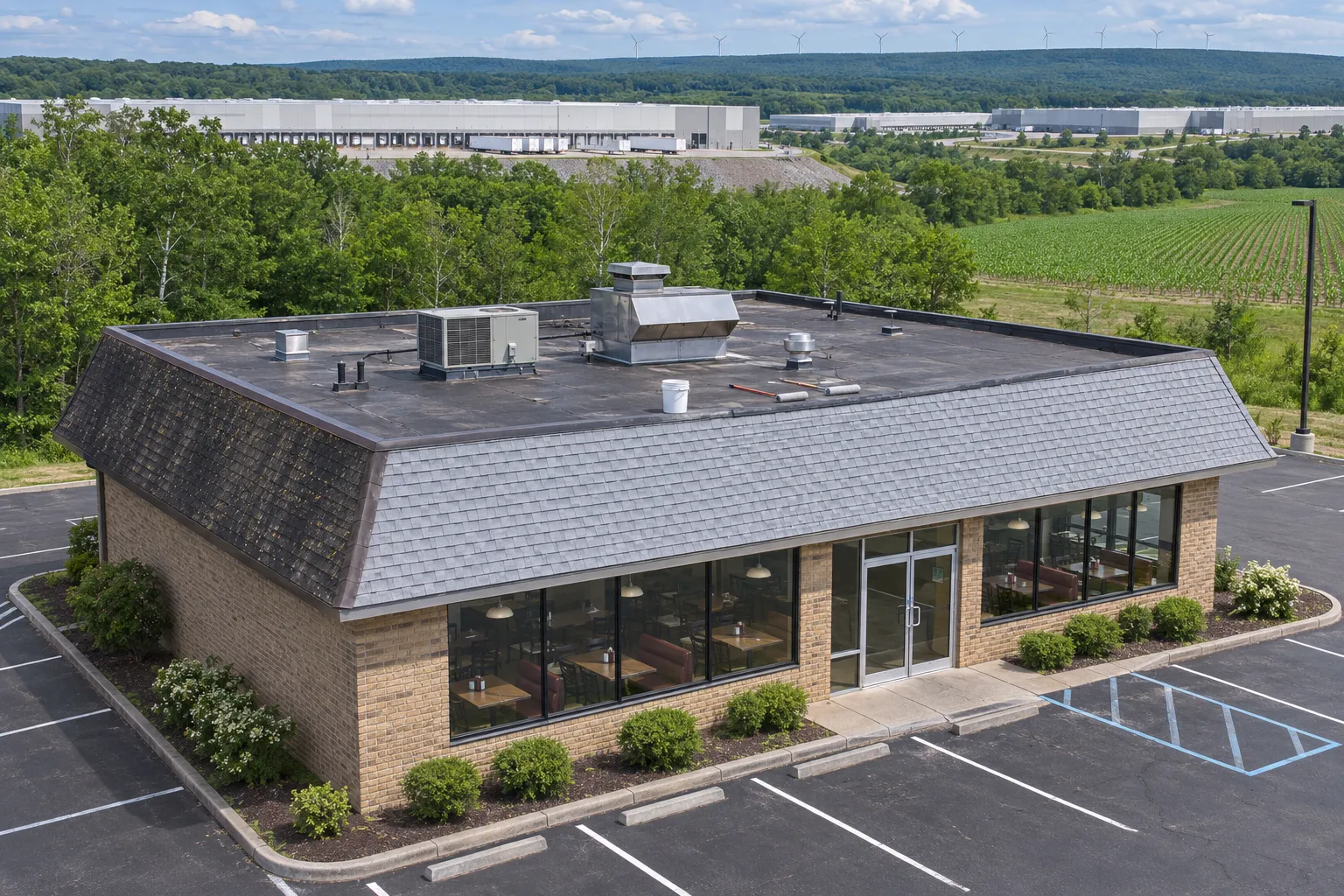
Coating for healthy commercial shingle faces, maker approved.
Hazleton Shingle Roof CoatingDirect answers about silicone on commercial roofs.
Few materials bond to cured silicone except more silicone, so future patches and recoats stay in the same family. Its surface collects dirt and can get slick when wet, which matters on busy service paths. It also costs more per gallon than acrylic, though fewer passes offset some of that.
Owners who plan for those trade-offs up front rarely have trouble with silicone later.
Many roofs take one heavy pass, and some get two lighter ones. The product sheet sets the total dry thickness, and ponding areas, seams, and curbs get extra. Thinner single passes over rough surfaces are where coverage gaps show up first.
Wet-film gauges are used as the work moves, so thin areas get caught before the coating cures.
No, because washing, repairs, and setup are already paid for in the first pass. A second coat adds material and labor for the extra layer. Coating plans out at about $2.50 to $4.00 per square foot of roof, against about $5 to $8 for replacement.
Planning both coats in the same visit keeps the cost of the second one lower still.
Technicians walking to vents scuff the surface, and later patches must bond to silicone. We lay out walk paths with granules, keep a list of compatible repair products, and deal with exhaust residue so it does not keep landing on the coating.
Unit curbs in those areas get fabric-reinforced flashing so boots and tools do less harm.
When thin areas, lost adhesion, or exposed substrate spread beyond a few isolated spots. We check remaining thickness, seams, and penetrations before deciding on a full recoat. Drainage and maintenance history matter as much as the age of the coating. Most aging silicone roofs we see need a wash, spot repairs, and one fresh silicone coat.
See a planning range for silicone on your roof, or call to book a ponding and adhesion check.