
Wind
Loose Edge Trim
- You See
- Trim rattling in wind or lifted at the corners.
- What It Means
- Loose trim lets water under the first panel. It is refastened before coating.
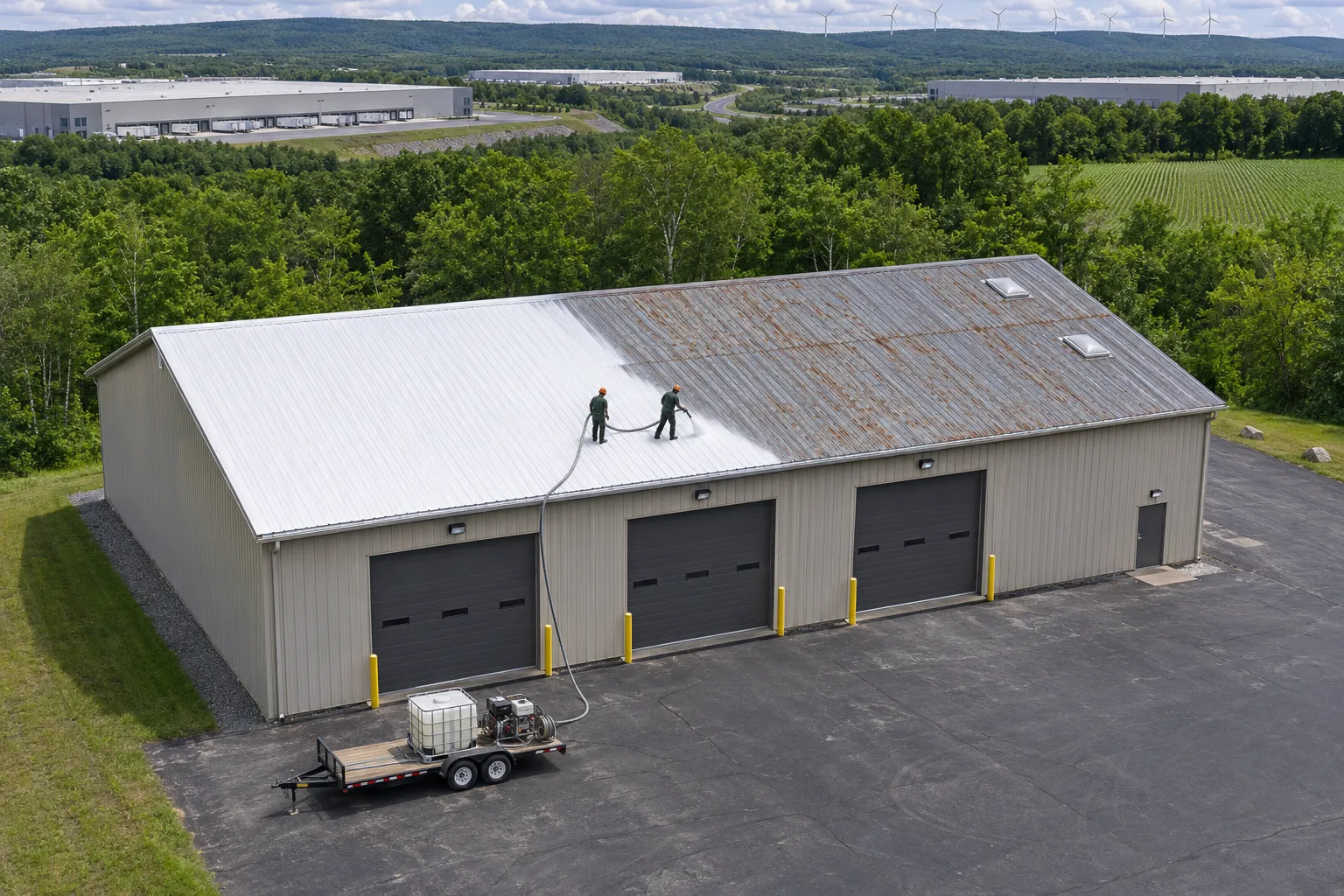
As a Tamaqua metal roof coating contractor, we repair edge metal, closures, and gutter joints on commercial block roofs before coating the field.
Tamaqua metal roof coating on a commercial block treats the perimeter as its own job. Edges have different joints, trim, and attachments than the panel field, so we check edge closures, gutter connections, and flashing before any coating goes on. A coating that looks continuous will not hold loose edge metal down.
Once the edges are fastened and the gutters drain, the field gets the usual screw sealing, lap repair, and rust priming, and the coating runs out over the repaired trim so the whole perimeter sheds water in one line.
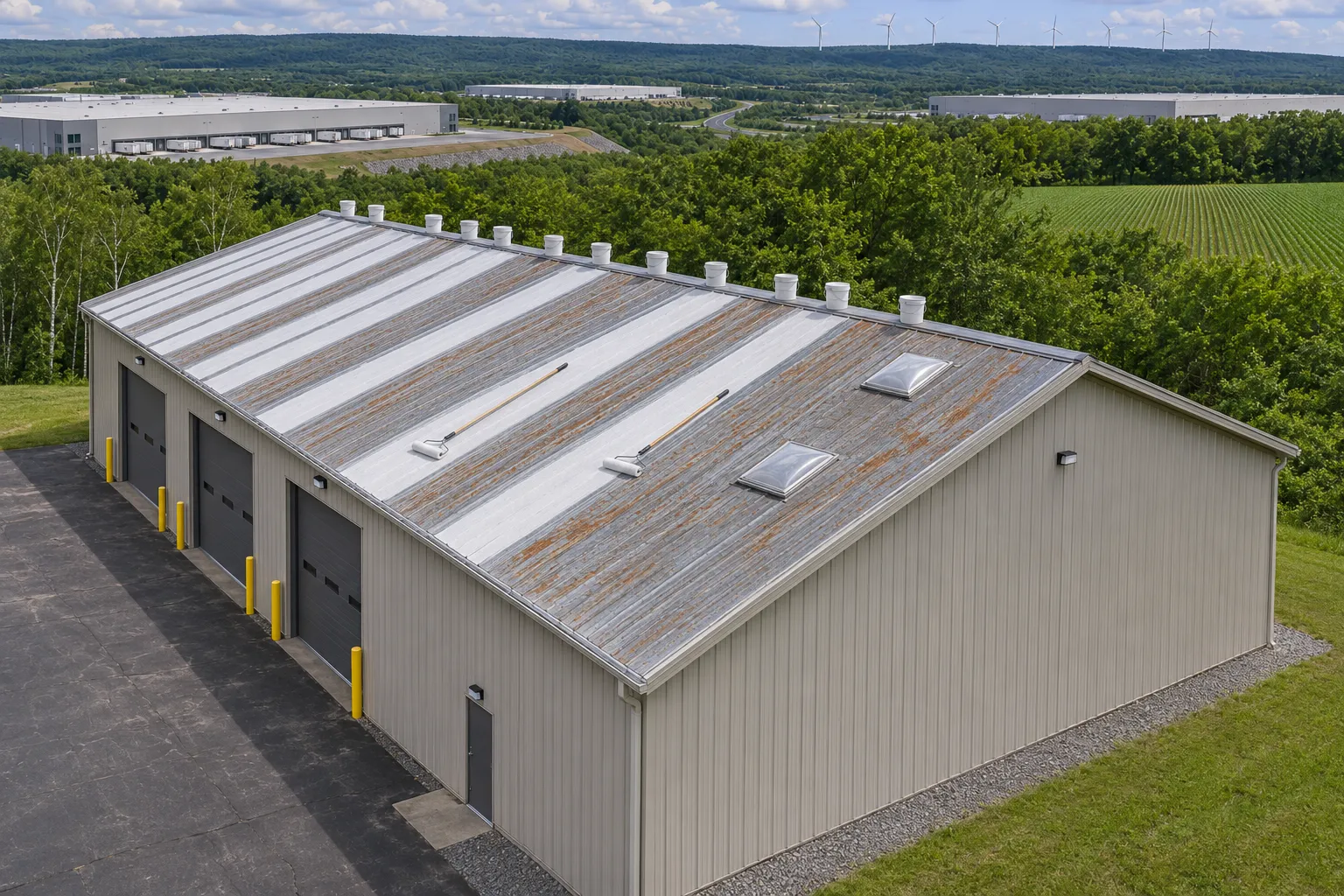
Block roofs fail at the edges first. These are the four we find most.
Fixing the edge first makes the coating on the field last. Here is why.
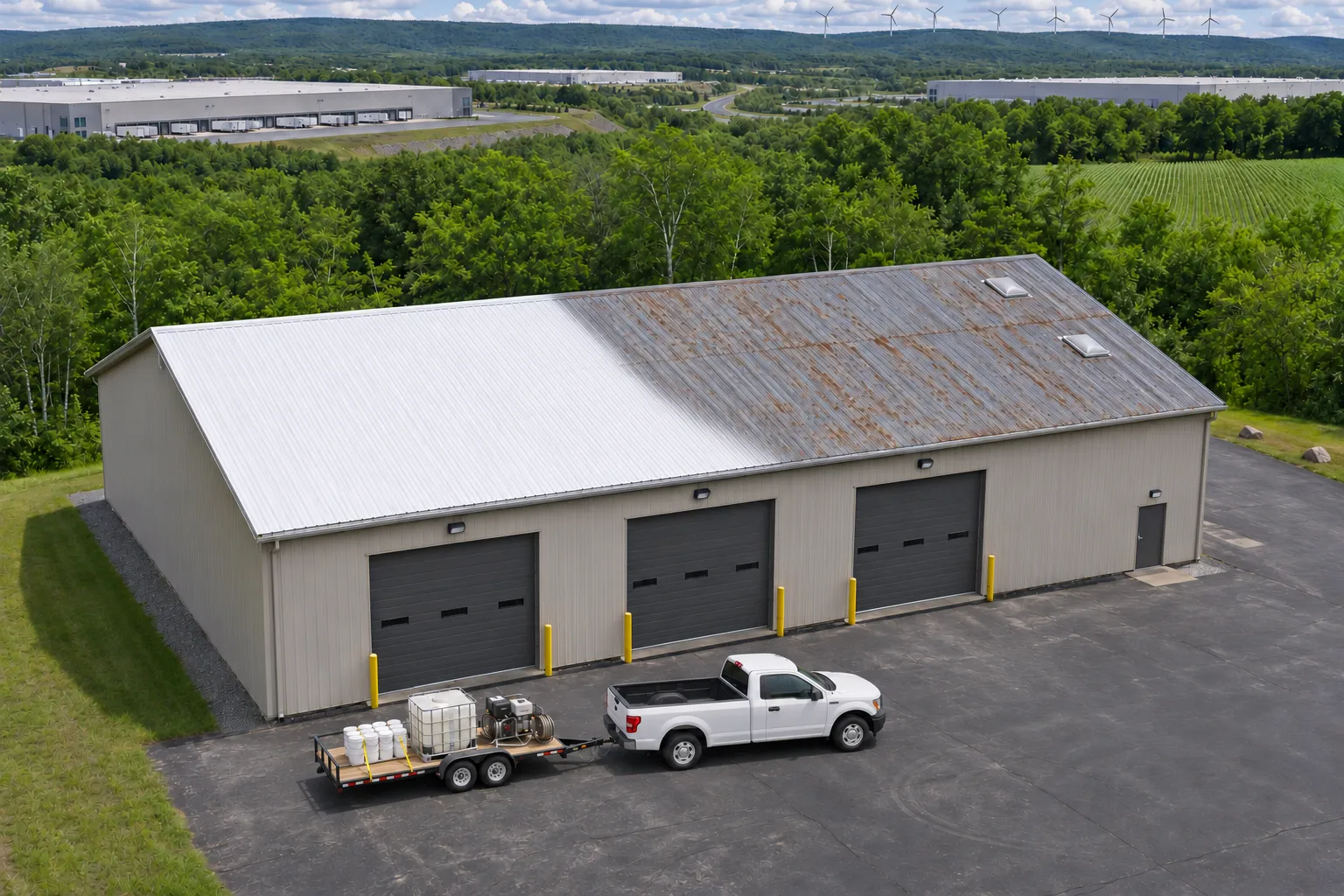
Tight edges stop wind from lifting the first row of panels. Edge trim refastened at tight spacing stays put through winter storms.
Resealed gutter joints carry water away from the storefront wall. Downspouts are checked so water leaves the roof at the right spot.
Repaired wall flashing closes the gap where most block roof leaks begin. Shared walls between buildings get flashing that moves with each structure.
Coating carried over repaired edges gives the perimeter a finished, sealed look. The finished edge also makes yearly inspections quicker.
Block roofs combine edge work with one of these field approaches.
Edge trim, closures, gutters, and wall flashing are repaired, with the field coated afterward. This package suits blocks where the field is still in good shape.
The perimeter work is followed by full restoration of the panel field. The repaired edge and coated field together give one sealed roof.
Flat rear roofs behind the storefront take silicone where water sits. Drains on the rear roof get cleared before the silicone goes on.
Sloped front sections that drain fast take acrylic. Front slopes get fabric at every lap before the acrylic coats.
Edge and gutter repairs come first on block roofs. Start with a planning range for yours.
Perimeter work gets its own step before the field is touched.
We walk the perimeter first, checking edge trim, closures, gutters, and wall flashing, then the field, screws, and laps. Photos of each edge problem go into the scope.
Sidewalks below the work are protected, and lifts are placed so storefront entrances stay open. Street-side work is timed around store hours.
Trim is refastened, closures replaced, gutter joints resealed, and wall flashing secured. Corners get extra fasteners, since wind loads are highest there.
Screws and laps are sealed, rust is primed, and the field is coated up to the repaired edge. The coating overlaps the repaired edge to seal the joint.
You get a list of the perimeter repairs, since edges are what to check after storms. The list also notes gutter hangers and downspouts that were replaced.
Tamaqua is one of the towns on our regular list. Building farther out? Phone us or message us to ask.
Warehouse bays coated in phases with tight stopping points.
Bottling roofs prepped with product and intakes protected.
Rusted-through shop panels replaced before the coating.
Workshop roofs opened up and leaks traced first.
Answers for owners of block and storefront buildings.
Yes. The perimeter has different joints and attachments than the field, so it gets its own inspection and repair details. We check edge closures, gutter connections, and flashing before coating, and fasten and seal those transitions so water sheds off the roof.
The edge repairs are listed separately in the scope so you can see what the perimeter needs.
Refastening trim, replacing crumbled closures, resealing gutter joints, and securing flashing where the roof meets walls. The coating then carries across a solid edge. Every edge fastener is set at closer spacing than the field, since wind pulls hardest at the perimeter.
Clear gutters each spring and fall, and check edge trim after high winds. Small gaps resealed early keep water off the storefront wall. A quick look after heavy snow or wind keeps small edge problems from becoming leaks.
It does when the panels are firm and the edges can be refastened. Older blocks usually need more perimeter work than newer buildings. Perimeter work on older blocks is listed by section so the costs are easy to follow.
That joint gets its own flashing detail, fastened to our roof and sealed against the neighboring wall so each building can move on its own. We look at both sides before any work, and we only touch the neighbor's wall with their permission. Lifts are placed at times of day when foot traffic below is lightest.
Short sections may be fenced off while edge work happens overhead. Entrances stay open and covered walkways are set where needed.
Get a planning range, or call to have the edges, gutters, and field checked.